







The SEND Information Report is updated annually to reflect changes and plans within the school. This report states the current provision within Buntingsdale Primary School and Nursery.
What types of Special Educational Needs does Buntingsdale Primary School provide for?
Buntingsdale Primary School and nursery caters for children from 3 to 11 years old, providing wrap around care in the form of Breakfast and After School club. We offer a broad and creative curriculum that is exciting and engaging and we are proud of our inclusive environment. Our school is physically accessible with an access ramps to all outdoor areas, electronic door systems around school and disabled toilet facilities.
Provision is made at Buntingsdale Primary School to ensure children identified as having additional needs in the four areas specified in the SEN Code of Practice 2015 receive appropriate additional support.
These four areas are:
Communication and Interaction (CI)
Cognition and Learning (CL)
Social, Emotional and Mental Health Difficulties (SEMH)
Sensory and/or Physical Needs (SPN)
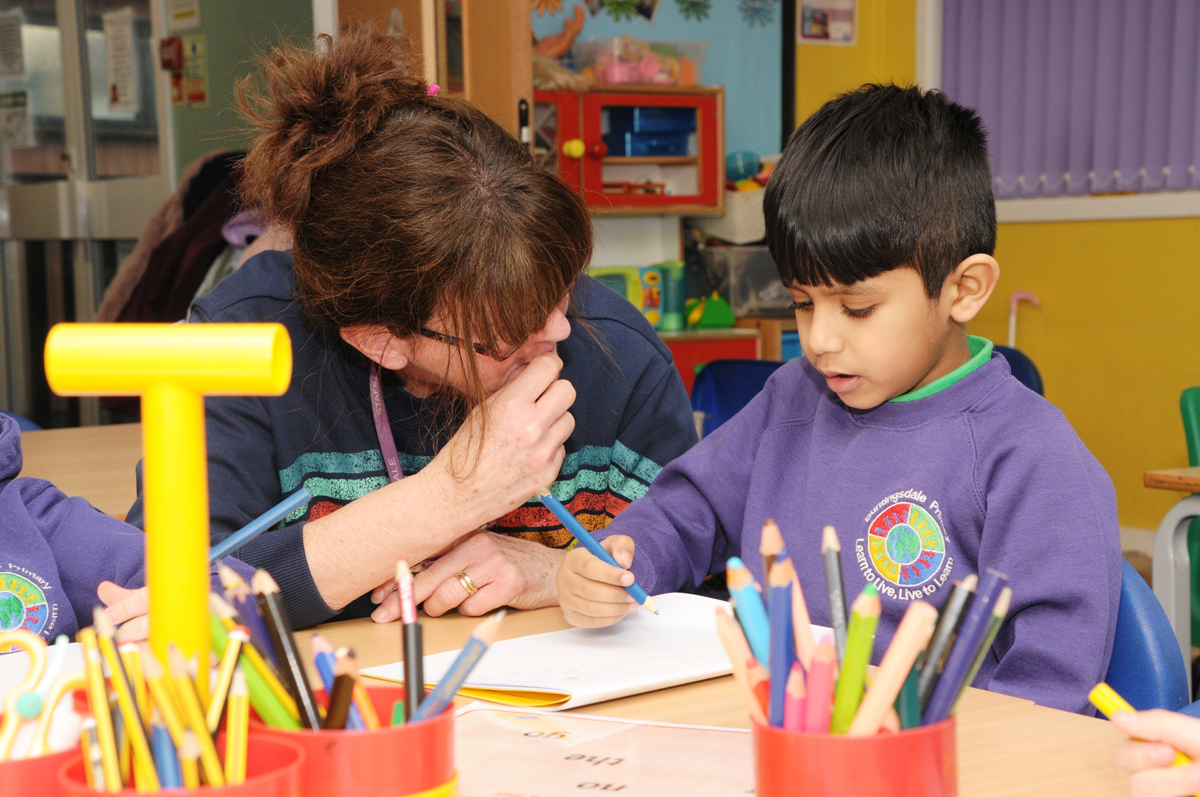
Children are supported through Quality First Teaching and interventions such as: Talk Boost throughout the school, Phonics catch-up programmes, emotional coaching, Zones of Regulation and ELSA.
We also respond to the needs of the children on roll at any one time, ensuring that we can fully support them using the best strategies and systems.
Academic year 2025-2026:
|
% of primary pupils with: |
School |
Local (Shropshire) |
National |
|
SEN Support |
21% (16) |
13.9% |
15.4% |
|
EHC Plans |
5% (4) |
5.7% |
4.1% |
|
All SEN |
26.6% (20) |
19.6% |
19.5% |
More detail about our educational provision for all our children can be found in our Teaching and Learning Policy.
How do we identify and assess pupils with SEND at Buntingsdale Primary School?
We assess each pupil’s current skills and levels of attainment on entry and all pupils at Buntingsdale Primary School are carefully monitored through a pupil progress process.
Class teachers make regular assessments of progress for all pupils and identify those
whose progress:
is significantly slower than that of their peers starting from the same baseline
does not match or better the pupil’s previous rate of progress
does not close the attainment gap between the pupil and their peers
is raised as a concern by a parent or carers
This may include progress in areas other than attainment, for example, social and emotional or sensory needs.
During a half-termly SEN staff meeting, teachers will work alongside the SENDCo to review current support maps in place for pupils on the SEND register. During this time, staff reflect and evaluate the strategies and interventions being used and provide an update on progress towards each target. In October, February and May new support maps are produced, which are then shared with parents/carers.
In addition to this, teachers can discuss any concerns about additional pupils in their class who may need to go on to our monitoring cycle. These pupils will then be monitored closely and if necessary, internal specialist staff or external professionals will be consulted.
To support children with SEMH (social, emotional and mental health) needs, the SENDCo and Headteacher(s) liaise closely with parents, class teachers and Teaching Assistants to identify any additional needs to discuss how best to support each individual child.
Further information can be found in our SEND policy and Teaching and Learning policy
on our website.
What is our approach to teaching pupils with SEND at Buntingsdale Primary School?
Children on the SEND register at our school are entitled to Quality First Teaching and will follow the National Curriculum offer, wherever possible.
Our aims:
To provide a happy and secure learning environment, where all needs are met, and
all successes are praised.
To ensure staff follow the National Curriculum and EYFS guidance when planning
and delivering lessons.
To offer engaging and practical lessons that allow all learners to develop their
knowledge and skills, whilst increasing their confidence.
Pupils have experiences of their own and other religious and cultural backgrounds
and values.
If needed, additional adaptations will be made to support individual pupils further, for example individualised timetables and specific interventions or adult support. SEND adjustments have also been considered for each curriculum area and these can be accessed via our school website.
Through our website you can find more information about our school vision and ethos and detailed information on each strand of the curriculum we offer.
Teachers are responsible and accountable for the progress of all the pupils in their class and wherever possible, ensure barriers are reduced and every pupil is achieving
How will we involve other organisations in meeting the needs of pupils with SEND and supporting their families at Buntingsdale Primary School?
Our SENDCo, Mrs Julie Boote, seeks advice and support from external professionals and agencies in line with our school SEND policy.
The external agencies provide support through school observations, assessments of individuals, attendance at annual reviews where necessary and written reports. They will also discuss their observations and assessments with parents.
Examples of external support include:
Educational Psychologist
Neuro-divergent Practitioner
Occupational Therapist
Physiotherapists
School Nurse
Strengthening Families
Social Workers
Family Support Workers
Learning Support Advisory Teacher (LSAT)
Sensory Inclusion Service (SIS), working with children with visual impairment and hearing loss
Behavioural Support Advisory Teacher
Early Years Consultant
Speech and Language (SALT)
We also carry out Early Help Assessments to access further support from health care professionals, Family Connect, Strengthening families and BeeU.
What training do staff have in relation to the needs of pupils at Buntingsdale Primary School?
Our SENDCo attends regular training and updates and shares information with staff at
regular staff meetings. Staff Training during the academic year 25/26 has included:
The Early Identification of SEND
Adaptive Teaching
Good Autism Practice Part 1 and 2
ECHNA request and Appendix B training
LA Behaviour Analysis and Recording
Attachment training
Emotion Coaching
How do we adapt the learning environment at Buntingsdale Primary School?
Buntingsdale Primary School is fully accessible for wheelchair users, and we have disabled toilets and electronic door systems. We have also made necessary adaptations to meet pupils’ needs, including:
adapting the curriculum to ensure all pupils can access it, for example, 1:1 support,
teaching style, content of the lesson, multi-sensory learning, group work.
adapting resources and staffing.
using recommended aids, such as laptops, iPads, coloured overlays, visual
timetables, larger font, pencil grips, looped scissors, support cushions, fidgets, kinetic sand and individual workstations.
adapting our teaching, for example, giving longer processing times, pre-teaching of key vocabulary, reading instructions aloud, additional videos on iPads.
modification of the environment to meet physical, sensory and medical needs of a child if required.
use of smaller rooms for specific interventions.
developing our outdoor provision
Where a pupil requires equipment, such as specific furniture, or adaptations to the building such as handrails or ramps, the school will liaise with the appropriate outside agencies or Local Authority.
How do we enable pupils with SEND to engage in activities with other pupils who do not have SEND?
Our aim is that all pupils have the same opportunities in school, and we will make reasonable adjustments to make this so.
All extra-curricular activities and school visits are available to all pupils.
All pupils are encouraged to go on residential trips.
All pupils are encouraged to take part in sports day/school plays/special workshops etc.
Pupils are not excluded from activities because of their SEND. Some activities may need adaptions. If there are concerns about the participation of a pupil with
SEND, schools will complete a risk assessment (involving parents and carers) to identify risks and plan reasonable adjustments to meet needs and protect the pupils’ safety and the safety of others (if appropriate).
What are the arrangements for consulting pupils and the parents/carers of pupils with SEND at Buntingsdale Primary School and involving them in their own education, or the education of their child?
At Buntingsdale Primary School, parents/carers are fully included in the education of
their child. This includes:
Termly parent/teacher meetings to review and discuss the Individual Pupil Centred Plans.
Parents/carers of pupils with an Education, Health and Care Plan are also invited to attend an annual review meeting, at least once a year.
Support and inclusion in assessments and on-going support provided by professionals from outside of school.
Parental representation on the Governing Body.
ELSA leaflets to support parents whose children are struggling with their Social and Emotional Mental Health.
Regular Facebook updates and photos to share school information.
Regular Facebook posts to share Local Offers to support parents.
Open-door policy ensures that the class teacher and the SENDCo are available to discuss any worries and concerns.
Pupils at Buntingsdale Primary School are fully involved in their learning education.
Individual Pupil Centered Plans are discussed with pupils, and their views are recorded.
Half termly Parent Information Sessions focusing upon a specific aspect of SEND and an opportunity for parents/carers to come in and speak to the SENDCo.
How do we assess and review pupils’ progress towards their outcomes?
We follow the graduated approach and the four-part cycle of assess, plan, do, review.
The class teacher works with the SENDCo to carry out a clear analysis of the pupil’s
needs.
This draws on:
the teacher’s assessment and experience of the pupil
the pupil’s previous progress, attainment and behaviour
other teachers’ assessments, where relevant
the pupil’s development in comparison to their peers and national data
the views and experiences of parents
the pupil’s own views
advice from external support services.
The effectiveness of support and intervention, and the progress of pupils is reviewed regularly by the SENDCo, class teacher and external professionals where required.
How do we evaluate the effectiveness of our SEND provision at Buntingsdale Primary School?
The effectiveness of provision for pupils with SEN is evaluated by the class teacher, SENDCo and SLT by:
reviewing pupils’ individual progress towards their goals each term
reviewing the impact of interventions after an agreed number of weeks
capturing pupil voice by talking with SEND pupils
data analysis
using Class Provision Maps and EHCP individual education plans to measure progress towards goals
holding annual reviews for pupils with Education Health & Care Plans.
What are the arrangements made by the governing body for dealing with complaints from parents/carers of pupils in relation to the provision made at Buntingsdale Primary School?
We advise parents/carers about how to make a complaint about SEND provision. The Headteacher will then discuss the complaint with the class teacher and SENDCo. If the matter is not fully resolved parents and carers will follow the school’s complaints policy, which can be found online.
The parents/carers of pupils with disabilities have the right to make disability discrimination claims to the first-tier SEN and/or disabilities tribunal if they believe that the school has discriminated against their child. They can make a claim about alleged discrimination regarding:
Exclusions
Provision of education and associated services
Making reasonable adjustments, including the provision of auxiliary aids and services
How do we support pupils transferring between phases of education or in preparing for adulthood?
We plan carefully for transition between different stages of education (transition from Nurseries, between year groups and transition to Secondary school) to be a positive experience that helps pupils to feel safe and continue to progress.
Parents/carers always have the opportunity to meet the new teacher and class staff. We share information with other schools at transition points. Social stories are used to help children with transition, and these can be taken home, with specific photos, to aid some families over the holidays.
Transition involves a range of activities including:
all pupils taking part in a ‘moving up day’ with their peers to their new school or class
where necessary, SEND pupils have additional visits to the school
The SENDCo has a conversation with the SENDCo at the receiving school for all pupils on the SEND register if requested
The SENDCo from the receiving school is encouraged to visit pupils with an EHCP or complex needs in school to meet them and the class teacher prior to transition. We encourage these meetings to be face to face.
Where is the information on the Shropshire local offer published?
All information regarding SEND Provision in Shropshire can be found by accessing the following link.
https://next.shropshire.gov.uk/the-send-local-offer/
Changes planned for 2026 -27
The 2026-27 academic year serves as a transitional phase for SEND provision in schools. While major legislative changes to Education, Health and Care Plans (EHCPs) will not happen until 2029, significant groundwork funding and new requirements are being rolled out immediately in England. Therefore the school will be preparing for the
National Inclusion Strategy with the following key The school will need to prepare for a new legal duty to implement digital PCPs for every child with identified SEND, recording their day-to-day needs, necessary support, and regular progress reviews. We currently complete these in word and can be e-mailed to parents upon request.
To allocate targeted Funding to review the school’s current interventions such as speech and language programs and catch-up programmes.
To compile and publish the school’s Inclusion Strategy to remove learning barriers by December 2026. At present each subject on the school website includes adjustments which may be made for children with SEND.
To fully implement the Adaptive Teaching Model throughout the school.
To apply a flexible approach to the implementation of TAs to ensure that individual children’s needs are met throughout the school. This will include more structured records of those children in receipt of additional funding, with clear actions in order to monitor and evaluate the targeted top-up funding.
To review and update the IT equipment throughout the school and how this can be
better used to support the teaching and learning of SEND pupils.